
Every driver learns these two words early and then spends years actually understanding them. Understeer and oversteer are the two ways a car fails to go where you're pointing it: understeer, the front won't turn enough and the car pushes wide; oversteer, the rear steps out and the car tries to spin. Simple to define, harder to diagnose in the half-second you have to react — and most drivers misdiagnose them, because the cause is usually an input they made a moment earlier, not the corner they're in. Let's make both legible.
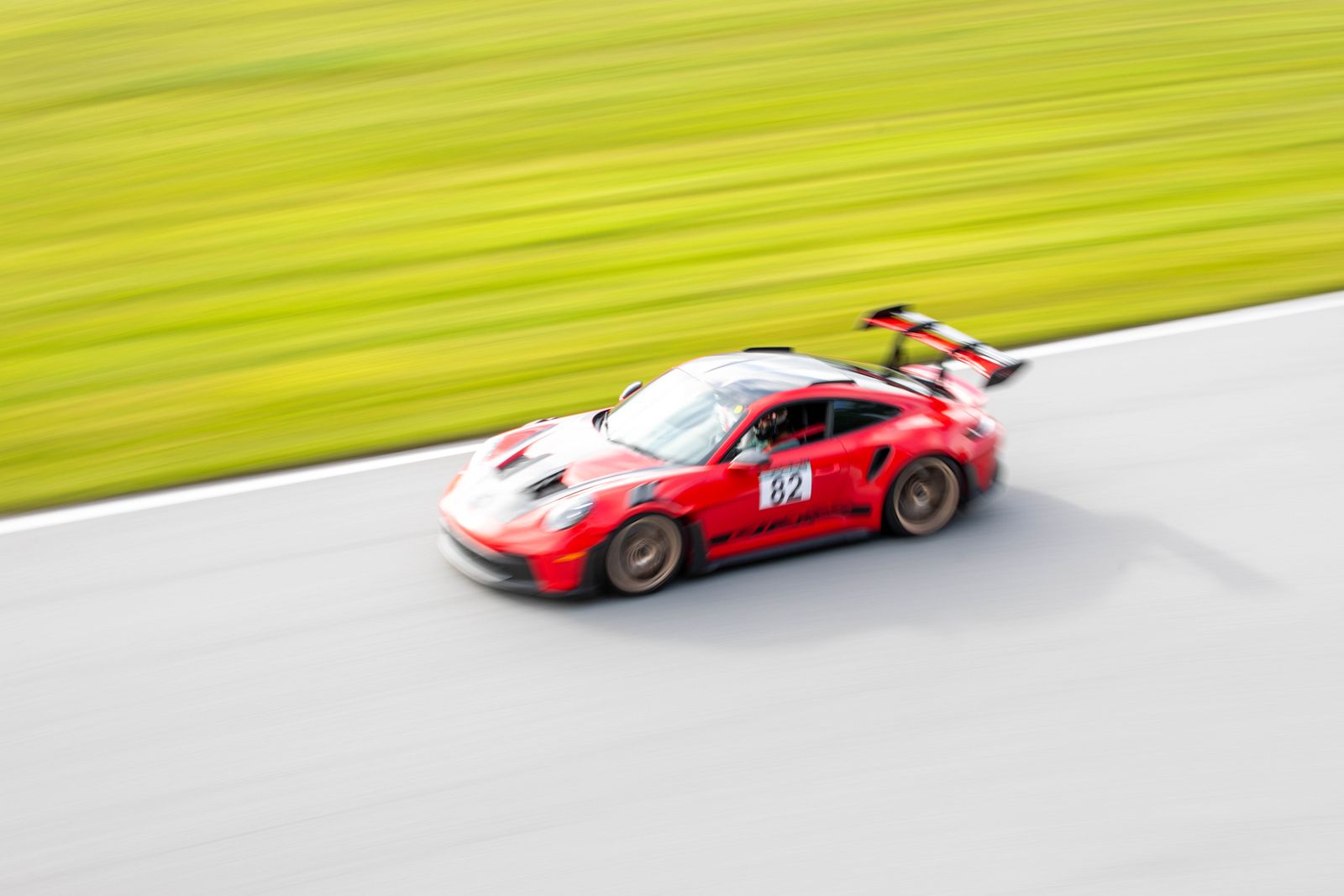
The definitions, cleanly
Understeer is when the front tires have run out of grip before the rears. You turn the wheel, but the car keeps going toward the outside of the corner more than the steering asks. The nose "pushes." You feel it as light, vague steering and the car drifting wide no matter how much lock you add — in fact adding lock makes it worse, because you're asking even more of already-saturated front tires.
Oversteer is when the rear tires have run out of grip before the fronts. The back of the car slides toward the outside, the nose points more into the corner than you asked, and if you do nothing the car rotates toward a spin. You feel it as the rear "coming around," a yaw you didn't command.
A memory hook, crude but reliable: understeer, you see what you're about to hit through the windshield; oversteer, you see it through the side window.
The deeper truth from the weight transfer guide: both are just an axle exceeding its share of the grip budget. Understeer is the front axle overloaded relative to the rear; oversteer is the rear overloaded relative to the front. Everything about fixing them comes back to rebalancing grip between the two axles — with your inputs in the moment, and with setup over the long run.
Diagnosis: what caused it
Here's where drivers go wrong. The car understeers or oversteers because of what you did to the load a moment earlier. Chase the symptom and you'll never fix it; find the input and you will.
Throttle-on understeer at corner exit is the everyday kind: you get on the power too early or too hard, load transfers to the rear, the front unloads, and the nose pushes wide. The car isn't broken — you asked the light front to turn while feeding the rear.
Entry understeer usually means you carried too much speed to turn-in, or you released the brakes too early and unloaded the front before it could bite. Trailing a little brake (trail braking) keeps load on the front and often cures it.
Lift-off / trailing-throttle oversteer is the one that bites hard, especially in rear-engine cars: you lift or brake mid-corner, load pitches forward off the rear, the light rear loses grip, and it swings. The car "snapped" because you unloaded the rear while it was already working hard laterally.
Power-on oversteer is the rear breaking traction from too much throttle for the grip available — classic in powerful rear-drive cars on corner exit, and the reason progressive throttle matters.
So before you blame the car, replay the half-second before the slide: what did your throttle, brake, or steering do to the load? Nine times out of ten, the cause is right there.
Fixing it at speed
The in-the-moment corrections are different for each, and both must be smooth.
Correcting understeer: counterintuitively, the fix is usually to reduce input, not add it. Ease off the throttle (gently — a sharp lift can flip understeer into oversteer) and/or unwind a little steering. Reducing throttle shifts load back onto the front and lets it regain grip; straightening the wheel slightly gives the saturated front tire a chance to bite again. Adding more lock or more throttle only deepens the push. Patience: let the front recover, then reapply.
Correcting oversteer: two things, together and quickly. First, steer into the slide — turn the wheel in the direction the rear is sliding (if the rear steps right, steer right) to keep the front pointed where you want to go. Second, be extremely careful with the throttle: in a power-on slide, ease off smoothly; in a lift-off slide, the worst thing you can do is lift more, so you may need to gently maintain or even add throttle to shift load rearward and settle the rear. Then, crucially, unwind the correction as the car straightens — leaving the countersteer in too long causes the classic secondary "snap" the other way (the tank-slapper). Smooth in, smooth out, eyes up and looking where you want to go, not at the wall.
The through-line: both corrections are about smoothly rebalancing load and never adding a shock input. Panic inputs — a big lift, a stab of brake, a fistful of steering — make either condition worse.
A little of each is normal — and useful
No car is perfectly neutral through every phase of a corner, and you wouldn't want it to be. A touch of entry oversteer (rotation) helps the car turn; a touch of exit understeer is a safety margin that keeps a powerful car from spinning on corner exit. Fast drivers use small, deliberate doses: a bit of trail-brake rotation to get the nose in, then a stable, mildly understeering platform to drive off the corner. The goal isn't zero of either — it's controllable amounts, in the right places, at your command rather than the car's.
Terminal, uncontrolled understeer or oversteer is what costs time and crashes cars. Momentary, managed slip is just driving near the limit.
Setup: fixing the tendency, not just the moment
If the car always does one or the other in a given phase, it's a balance problem you can tune, not just drive around. The levers, in rough order of accessibility:
Tire pressures are the fastest, cheapest change. Raising pressure at one axle generally reduces its grip once you're past the optimum; lowering it (within reason) can increase grip. Push the front for entry bite, adjust the rear to calm or free the back. This is the first thing to try and the subject of our Mid-Ohio setup sheet.
Anti-roll bars. A stiffer bar at one end transfers more load across that axle in a corner, which reduces that end's grip. Stiffer front bar → more understeer; stiffer rear bar → more oversteer. Softening the front (or stiffening the rear) frees a pushy car, and vice versa. Bars are the classic balance dial.
Springs, ride height, and rake. A more nose-down attitude (rake) generally adds front grip and entry rotation. Softer springs at one end add grip there. These are bigger, slower changes than pressures and bars.
Alignment. More front negative camber helps the loaded outside-front tire bite in a corner, reducing understeer. Rear toe and camber tune rear stability.
Brake bias and differential shape entry and exit balance specifically — forward brake bias calms entry, a more aggressive diff setting can free or stabilize the rear on power.
Change one thing at a time, in small steps, and always ask first whether the problem is the car or your inputs — because a setup change can't fix throttle-on understeer that you're causing with your right foot.
Is one faster than the other?
Neither, inherently — the fast car is a balanced one you can place precisely. But a mild understeering balance is generally safer and more forgiving, which is why most street cars and novice track setups lean that way: understeer scrubs speed predictably and self-corrects when you lift, whereas oversteer can spin you. As drivers get better, they tune toward neutral and use small, deliberate rotation to help the car turn, because a car that rotates on entry lets you get to power sooner. The progression is: learn to control understeer first (the safe failure), then earn the right to a more neutral, rotational car as your inputs get smooth enough to manage it.
The takeaway
Understeer is the front giving up (car pushes wide, you see it through the windshield); oversteer is the rear giving up (back steps out, you see it through the side window). Both are an axle overloaded relative to the other, and both are usually caused by what you did to the load a half-second earlier — so diagnose the input, not just the symptom. Fix understeer by reducing input and letting the front recover; fix oversteer by smoothly steering into the slide, managing throttle, and unwinding the correction cleanly. And if the car does it every single lap, reach for the setup levers — but only after you've ruled out your own hands and feet.
FAQ
What is the difference between understeer and oversteer? Understeer is when the front tires lose grip first and the car pushes wide of where you're steering. Oversteer is when the rear tires lose grip first and the back slides out, turning the car more sharply than you asked. Understeer you see through the windshield; oversteer, through the side window.
How do you correct oversteer? Steer into the slide (turn the wheel the way the rear is sliding), manage the throttle smoothly — ease off gently in a power-on slide, avoid lifting further in a lift-off slide — and unwind the correction as the car straightens to avoid a secondary snap. Keep your eyes on where you want to go.
How do you fix understeer? In the moment, reduce input — ease off the throttle gently and unwind a little steering so the front tires regain grip; adding more lock makes it worse. If it happens every lap, reduce front tire pressure, soften the front anti-roll bar or stiffen the rear, or add front camber.
Is understeer or oversteer faster? Neither by itself — a balanced, precisely placeable car is fastest. Mild understeer is safer and more forgiving, which is why beginners start there; experienced drivers tune toward neutral and use small amounts of rotation to help the car turn and get to power sooner.
Follow the program
Track guides, TT strategy, and the Bradshaw Autosport race program — straight from the paddock.
Get in touch