
Mid-Ohio might be the best track in the country to learn on — technical enough that everything you build here transfers everywhere, forgiving enough (mostly) that the lessons don't cost bodywork. If your first HPDE weekend is here, you picked well. This guide covers what the driver's meeting won't have time for: how the weekend actually runs, what the track demands of a first-timer, and the handful of corners that will test you. It sits under our Mid-Ohio database, and the full corner-by-corner guide is your next read.
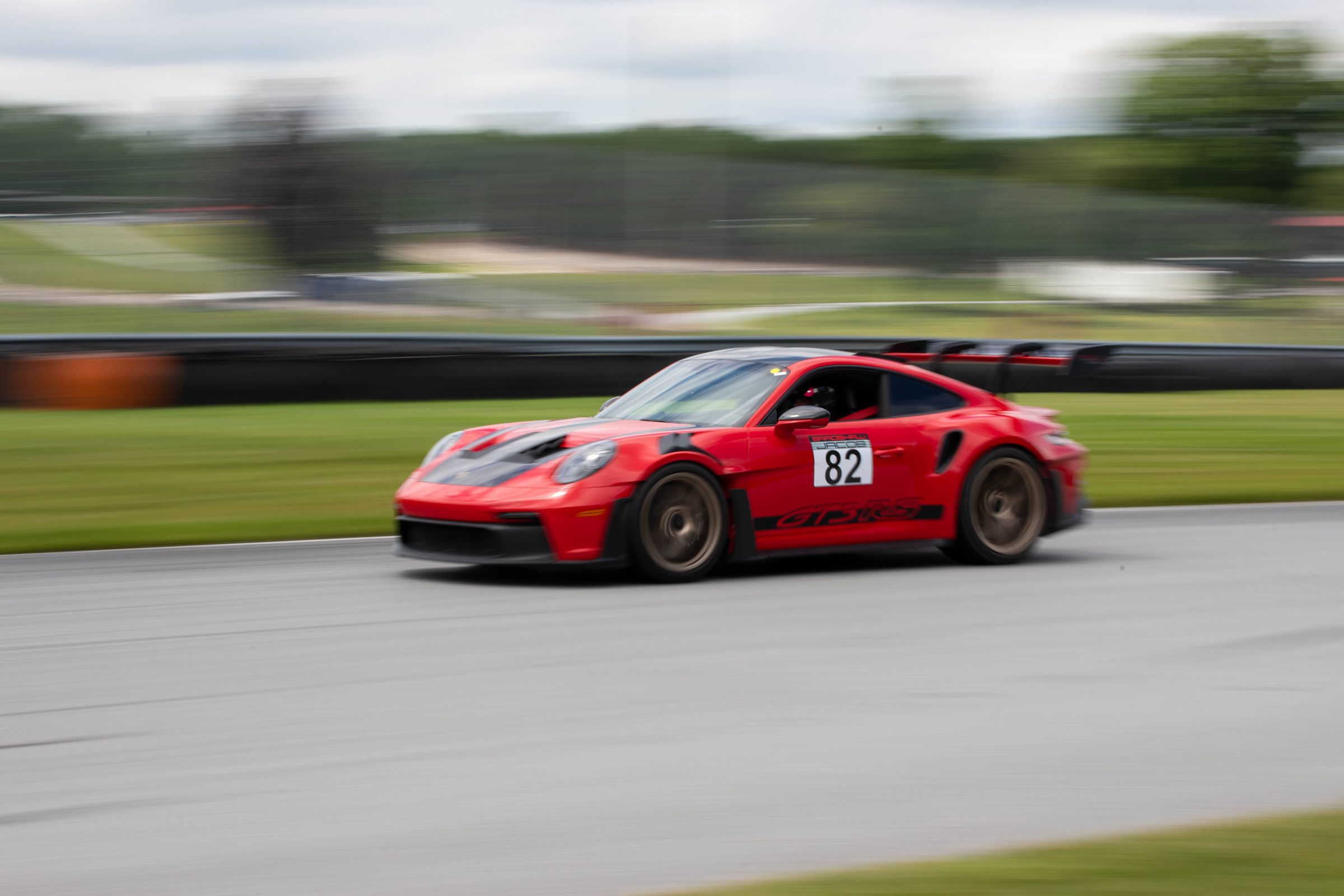
How the weekend works
HPDE weekends at Mid-Ohio — NASA Great Lakes runs them alongside their race and TT program — organize drivers into run groups by experience. In NASA's system that's HPDE1 through HPDE4: novices with an instructor in the right seat, through solo-approved drivers working on advanced skills. We broke down the full ladder here. You'll rotate through 20–25 minute sessions all day, typically four or five of them, with a classroom session between morning runs in the lower groups.
You will almost certainly run the club course — 2.4 miles, 15 turns, including the chicane. That matters if your track knowledge comes from watching IndyCar onboards or sim laps on the pro layout: the chicane after Turn 1 will be new pavement to you, and it's a proper braking test. Budget your first session for learning it.
First-timer logistics: arrive with a full tank and an empty car (everything out — floor mats, radar detector, the water bottle that becomes a projectile), tires at the pressure your organizer or instructor recommends, brake fluid fresh if the car hasn't had a flush in a year, and a helmet that meets the event's Snell rating. Tech inspection is real; do the checklist at home, not in the paddock.
What Mid-Ohio teaches — and demands
The track's character is momentum and precision. There is almost no place to rest: elevation changes, camber changes, and a rhythm section that rewards smooth hands. That's exactly why skills built here transfer so well — and why the track exposes rough inputs immediately.
Three things first-timers consistently underestimate:
The braking zone at the end of the back straight (China Beach). Downhill, arriving faster than anywhere else on the lap, with a sand trap straight ahead named for the number of cars it has collected. Brake earlier than feels necessary for your first sessions, and move your marker up only as tires and confidence warm. More first-weekend incidents happen here than everywhere else combined.
The off-camber right before Thunder Valley. The track banks away from you mid-corner, and the instinctive panic lift is exactly the wrong move. Enter it conservative, stay steady on throttle, and give it a season of respect.
The wet. Mid-Ohio's grip in the rain is famously low. If your weekend turns wet, don't write it off — lower every entry speed substantially, stay off painted curbs, and treat it as the cheapest car-control school you'll ever attend. Instructors genuinely love teaching in the rain here.
Passing, point-bys, and traffic
In HPDE groups all passing is consent-based: the car ahead signals where you may pass, and in novice groups passing is restricted to designated straights — at Mid-Ohio that means the back straight and the front straight. Two etiquette notes specific to this track: through the kink on the back straight, slower cars hold their line right and let the pass complete on the left before the braking zone; and if you're the faster car, complete the pass early enough that you're not forcing the other driver to brake deep into the China Beach zone. We mapped every zone and the etiquette per run group in the passing zones guide.
The mental reframe that makes traffic easy: a point-by costs you nothing. Your lap time doesn't matter this weekend — your inputs do. Wave the faster car past, watch their line through the next three corners, and steal what works.
A session plan that actually builds skill
Session 1: learn the map. Follow the line, moderate pace, no hero braking. Goal: know what corner comes next without thinking by session's end.
Session 2: references. Pick a braking reference and a turn-in reference for the three big zones (chicane, China Beach, Carousel). Consistency, not speed.
Session 3: the exits. Work the Keyhole and Carousel exits — patient entries, early throttle. This is where Mid-Ohio pace actually comes from, and building the habit now saves you re-learning it in two years.
Session 4: put it together. Slightly faster everywhere, still finishing every braking zone with margin. End the weekend with the car intact, the tires happy, and a notebook full of references — that's a won weekend.
Take notes between every session while it's fresh. Corner by corner: what the car did, what you did, one thing to change. Five minutes of notes doubles the value of the next session.
After your first weekend
If the weekend lights the fire — and Mid-Ohio has a way of doing that — the path forward is straightforward: progress up the HPDE ladder toward solo status, and when you find yourself chasing lap times, read TT vs HPDE to see when adding a timing transponder makes sense. Mid-Ohio hosts three NASA Great Lakes weekends in 2026 — dates here — so the next opportunity is never far.
FAQ
Is Mid-Ohio a good track for beginners? One of the best. It's technical enough to build real fundamentals and runs strong instructional programs, and its risks are concentrated in a few known spots (China Beach, the off-camber right) that instructors brief thoroughly.
What should I bring to a Mid-Ohio HPDE weekend? An approved helmet, a car that passes tech (fresh brake fluid, good pads and tires, no leaks), tire pressure gauge, torque wrench, water, and sunscreen. Remove everything loose from the car including floor mats. A pop-up canopy makes the paddock much friendlier in July.
Which corners at Mid-Ohio catch first-timers? The China Beach braking zone at the end of the back straight (downhill, sand trap ahead), the off-camber right before Thunder Valley (grip disappears mid-corner), and the chicane braking zone once brakes get hot late in sessions.
Follow the program
Track guides, TT strategy, and the Bradshaw Autosport race program — straight from the paddock.
Get in touch