
The apex is the point where your car runs closest to the inside of a corner. When you reach it — early in the corner or late — is one of the most consequential decisions you make on a lap, and it's the decision most new drivers get backwards. The short answer: an early apex feels natural and is usually slow; a late apex feels awkward and is usually fast. Here's why, and the exceptions.
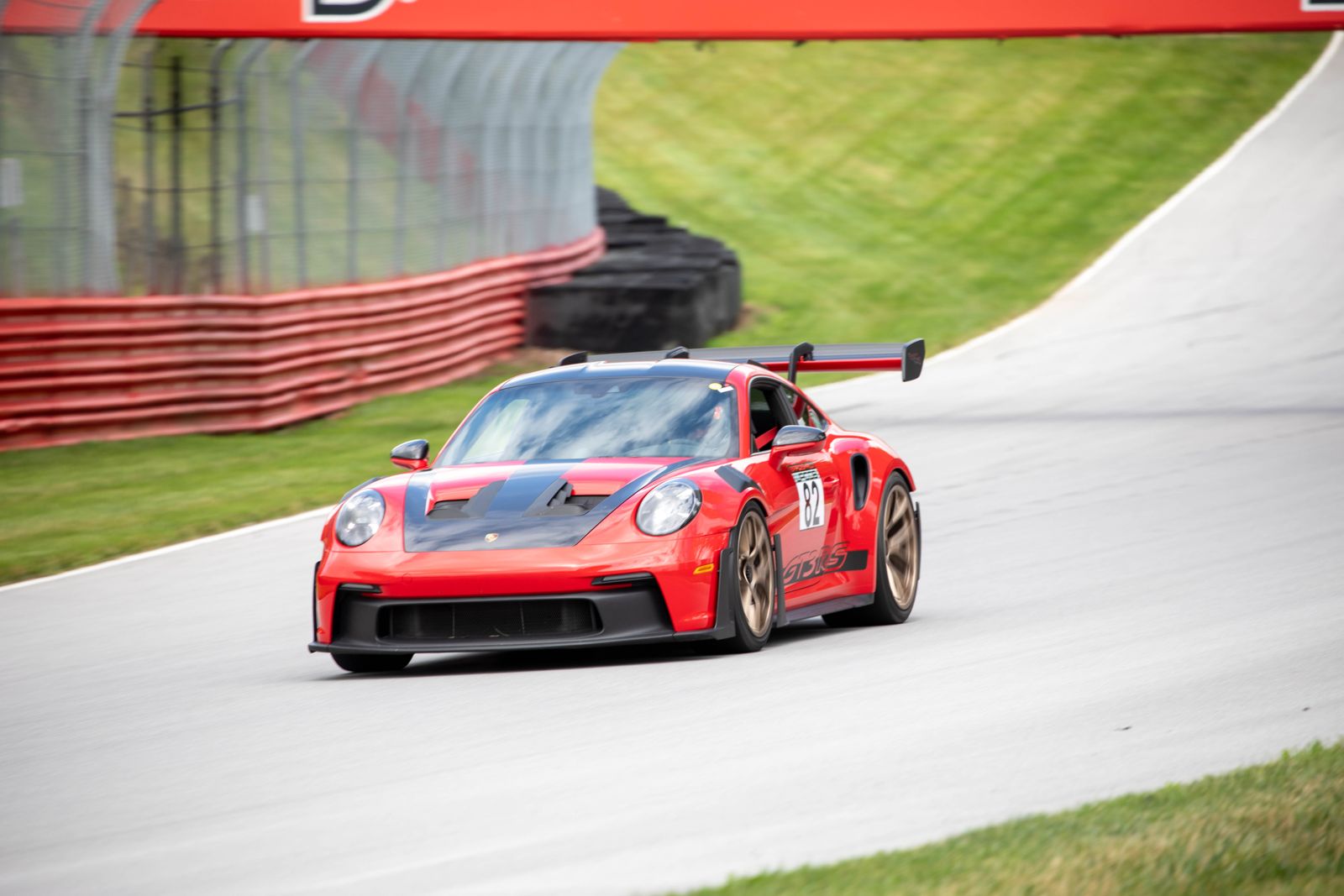
The three apexes
The geometric apex is the true middle of the corner — the point that gives the single largest, most symmetrical radius, exactly halfway around the bend. If a corner were a pure circle with nothing before or after it, the geometric apex would be fastest.
An early apex is any apex reached before the geometric middle. You turn in early, brush the inside sooner than halfway, and as a result the car is pointed toward the outside of the corner for the second half — you run out of road on exit and have to keep turning (or lift) to stay on track.
A late apex is any apex reached after the geometric middle. You turn in later, wait, and clip the inside past halfway, by which point the car is already rotated toward the exit — so the second half of the corner is nearly straight and you can unwind the wheel and get on the power.
Why the corner is really about the exit
Here's the key idea, straight from the racing line guide: a corner almost never exists for its own sake. It exists to feed the straight that follows it. And speed onto a straight compounds — every mph you carry out of the corner rides with you all the way down the straight and shows up again at the next braking zone. So the apex that wins is the one that maximizes exit speed onto the following straight, not the one that feels fastest in the corner itself.
That's what makes the late apex usually right. By reaching the inside later, you've already done most of your direction change, so you can straighten the wheel earlier and get to full throttle sooner. The early-apex driver, meanwhile, is still cranking in steering at the exit, still scrubbing speed, still waiting to get on the power — and they carry that deficit down the entire straight. The late apex trades a slightly slower entry and mid-corner for a faster exit and a faster straight. On any corner leading onto a straight, that trade wins.
Why the early apex is such a trap
Early apexing is the single most common mistake in track driving, and it's common because it feels right. The corner is in front of you, your eyes go to the apex, and turning in early points you straight at it. It's comfortable. It's also the setup for running wide at the exit — because once you've kissed the inside early, geometry sends you toward the outside wall for the rest of the corner. You either run off the track or you add steering and lift to stay on, killing your exit. The scary part is that an early apex doesn't feel dangerous until the exit, when you're suddenly out of road and out of options.
The cure is usually two things: turn in later, and look further ahead — to the exit, not the apex — so your hands wait for the later apex instead of diving for the near one. When drivers "find time" by fixing early apexes, it's almost always a vision-and-patience fix, not a bravery one.
When an early apex is actually correct
Late apex is the default, not a law. There are real cases where an earlier apex is right:
A corner followed immediately by another corner in the opposite direction. In an esses or a quick left-right, you deliberately apex the first corner early so you're positioned on the correct side of the track for the second one. You sacrifice the first corner's exit to set up the more important corner. This is the "sacrifice line" — driving one corner off-line on purpose to drive the next one right.
A corner onto a very short chute followed by a hard braking zone. If there's barely any straight after the corner and you're braking again immediately, protecting the exit matters less — there's no long straight for exit speed to compound down — so a more geometric or slightly early apex that carries more mid-corner speed can win.
Constant-radius or increasing-radius corners with no meaningful straight after. A long, steady sweeper that just leads into another sweeper rewards maximizing overall radius and speed rather than sacrificing entry for an exit that doesn't pay.
The test is always the same: what is this corner feeding, and how much does the exit matter? Long important straight after → late apex, protect the exit. No real straight, or another corner right after → earlier apex to set up what's next.
Decreasing-radius corners: later than they look
One case deserves its own warning. A decreasing-radius corner — one that tightens as you go through it — punishes an early apex brutally. If you apex early, you're at the inside just as the corner tightens and demands more steering, and you have nothing left. These corners require a later, more patient apex than they appear to, so that the car is already turned and slowing into the tightening section rather than fighting it. Mid-Ohio's Keyhole is a classic example — the corner keeps asking for more, and drivers who apex it early pay all the way down the back straight. Late apex, wait, wait, then get to power.
How to change your apex on track
If you suspect you're apexing early (running wide on exit, lifting onto straights, using no exit curb — sure signs), the fix is mechanical: pick a turn-in reference a car length or two later than you currently use, and aim your eyes at the exit as you turn. The car will reach the inside later, you'll find you have road left on exit, and you can get on the throttle earlier. It feels wrong at first — like you've turned in too late and will miss the apex — and then the exit opens up in front of you and the stopwatch rewards it. Move the turn-in reference in small steps until the exit is right.
The takeaway
Early apex: turn in early, feels natural, runs you wide, kills the exit. Late apex: turn in later, feels awkward, sets up the exit, wins the straight. Default to late on any corner that feeds a straight, use an early apex deliberately only to set up a following corner or when the exit genuinely doesn't matter, and treat decreasing-radius corners as later than they look. Get the apex right and half of your line problems solve themselves — because the apex is where the whole corner is decided.
FAQ
What is a late apex? An apex reached after the geometric middle of the corner. You turn in later and clip the inside past halfway, so the car is already pointed toward the exit and you can straighten the wheel and accelerate sooner.
Why is a late apex usually faster? Because corners feed straights, and exit speed compounds down the straight. A late apex trades a slightly slower entry for an earlier, faster exit, carrying that advantage the whole length of the following straight.
When should you use an early apex? When the corner is followed immediately by another corner you need to set up, or when there's no meaningful straight after the corner for exit speed to pay off. In those cases an earlier apex that protects mid-corner speed or positions you for the next corner is correct.
What is the geometric apex? The exact middle of the corner — the point giving the largest, most symmetrical radius. It's the theoretical fastest apex only for an isolated corner with no important straight after it, which almost never exists in practice.
Follow the program
Track guides, TT strategy, and the Bradshaw Autosport race program — straight from the paddock.
Get in touch